

Murchison Falls National Park lies at the northern end of the Albertine rift valley where the bulky Bunyoro escarpment merges into the vast plains of Acholi land, one of Uganda’s oldest and largest Conservation area, it was initially gazatted as Wildlife Reserve in 1926 to protect a savannah that Winston Churchill described in 1907 as kew gardens and the zoo combined on an unlimited scale.
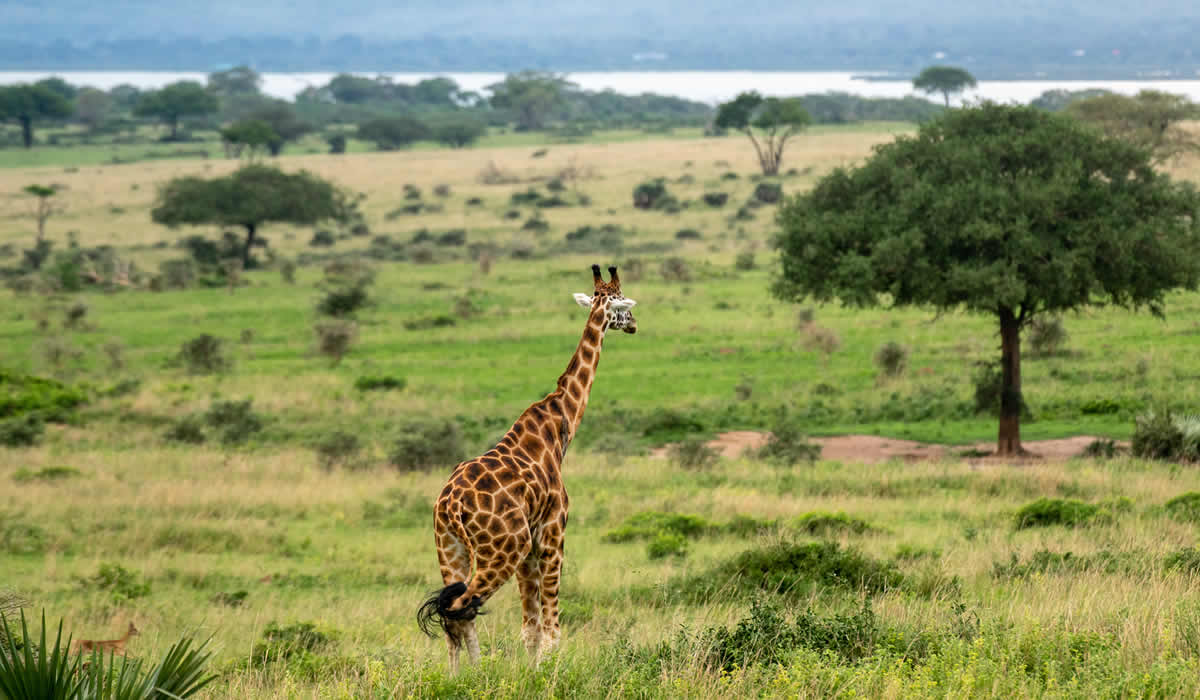
It is located in the north western part of Uganda and managed by Uganda Wildlife Authority which was established by an act of parliament cap 200 in 1996. The park covers 3893sqkm of land meaning that it covers approximately 11% of Ugandans surface area and it is the habitat of 76 species of mammals and 451 species of birds which makes it a good place for tourism activities.
The Park is bisected by the Victoria Nile which first races down 80km of white-water rapids before plunging 40m over the remnant rift valley wall at Murchison Falls which is the centerpiece of the Park. This Waterfall was named in 1864 by the explorer Samuel Baker who considered it the most important object through the entire course of the river. So, the northern part of the Nile is occupied by the Luo speaking tribe and the southern part of Nile is the Bantu speaking tribe under Bunyoro kingdom.
Between 1898 to 1907, Murchison falls National Park was heated by tsetse flies which causes sleeping sickness to human beings, then in 1907 the Colonial Government cleared the human population from a 13000sqkm zone around the Nile and this made away for establishment of the Bunyoro Wildlife Reserve on the southern bank of the Victoria Nile in 1910. The expansion of the reserve to northern bank of Nile was done in 1928 and at this point the park was named as Bunyoro Gulu Wildlife Reserve and it covered 4750sqkm
In 1952, Murchison Falls National Park was the first of the two National Parks to be declared in Uganda with Queen Elizabeth National Park and these was when the National Parks act of the parliament was passed in Uganda.
By the early 1960s, Murchison Falls National Park contained the highest density of large mammals anywhere in the world and with the obvious threats from poaching that this could attract buffer zonesand they were created in the form of Karuma (1964) and Bungungu (1968) Wildife Reserves.
The protection of wildlife inside the Park boundaries called for more animals which inserted more pressure to human beingsand they started hunting especially the Elephants and so the park authorities tried to keep them within the park boundaries. Then by late 1960s, it was considered to be the best safari Park in East Africa and it hosted 60000 visitors per year and therefore, the number of Elephants increased to over 14000 by the mid-1960s which was more than land space could accommodate.
During 1965 and 1967, 2000Elephants were killed because they were rapidly destroying and changing the environment especially from forest and woodland to open savannah in Murchison Falls National Park and this also applied to 3873 hippopotamuses were also killed between 1965 and 1969 because it was over the carrying capacity.
Foreign visitors were stopped after Idi Amini coming to rule the governance and this lead to closure of the Park for one year between 1972 to 1973 and he renamed the Park to Kabalega Falls National Park and after Milton Obote coming to power there was rampant poaching which lead to the reduction of various animals like Elephants , Buffalos , Hippopotamus among others and in 1990s the joint efforts of the Park administration , conservation groups and international donors had to rebuilt the National Park to normal and visitors started increasing up to today since the animals were guided and protected hence leading to the development and existence of Murchison Falls National Park.
Given the history of Murchison Falls National Park today, there is an era of oil discovery in the Park with at least 2.5billion barrels lying under the Park whereby a number of tested wells have already been drilled and some areas restored to reduce its negative impacts on the Park environment which aims on nature conservation for sustainable development.
Murchison falls conservation area is one of the 7 conservation areas in Uganda. The parkconsists of one national Park plus 5 wildlife Reserves and they include Murchison Falls National Park with Karuma Wildlife Reserve, Bungungu, Ajai, East Madi and KabwoyaWildlife Reserve. So, in the eastern part it is bordered by Karuma WildlifeReserve which covers (713sqkm), in the southern part it is bordered by BungunguWildlife Reserve (748sqkm) and these are managed as one ecosystem with Murchison Falls National Park under one Protected Area.
The Park is covered by various types of vegetation compared to other National Park in east Africa and it contains a big number of ecological community with various categories of vegetation found in the world and these include tropical savannah , tropical woodland , tropical deciduous forest , tropical evergreen forest, Padero woodland, Riverine woodland and Borussia’s vegetation.
CLIMATE
Murchison Falls National Park is hot and tropical climate. The Nights are cold and day time the temperature is hot and it has the humidity of 60%.
The annual temperature is hot ranging from 180C to 310Cand mean annual rainfall at Paraa is 1085mm. Daytime temperature is 31°C/88°F and Night temperatures is around 18°C/64°F.
Dry Season / High season: It is best to visit Murchison Falls National Park during the dry season. It is from June to September and from Mid-December to February.
Rainy Season / Low Season: This is from the month of March to May and October to Mid-December, so roads become muddy and Safari Landcruiser is recommended.
ACCESS / HOW TO GET THERE
BY ROAD TRANSPORT
The heart of Murchison Falls National Park can be accessed by using various routes through driving. Drivers can access the Park by using the various routes from Kampala and this include the northern route from Wangkwar gate to Paraa/Mubako ferry point which covers 72km when using Kampala to Guluhighway up to Pakwach and also pass via Purongo to Wankwar gate.
Tangi gate in the northern part of the park can also be used which is 26km to the Ferry crossing point in Paraa at Mubako via Kampala,Gulu to Pakwach road then to Tangi gate where one can branch from Karuma Falls to Join Pakwach road.
The southern route is from Kichumbanyobo gate which is 85km to the Ferry Crossing point on the Victoria Nile via Masindi road.
Then the western route which is 5km from Bungungu gate to the Ferry Crossing point at Mubako via Hoima to Buliisa road
Lastly the Chobe gate tothe Ferry Crossing point which is the eastern route.
Please note that the ferry crossing point is also the starting point when going for the boat cruise on the Victoria Nile and it is also the same point where you will find the ranger guides for game drives near Paraa Safari Lodge staff center.
BY AIR TRANSPORT
The clients can also fly from Entebbe International airport to either Bungungu airstrip in Southern Bank or Pakuba airstrip in the northern bank and it will depend of the location of your lodge which will determine the airstrip. The flights here operate with a minimum of 4 pax.
FERRY CROSSING AT MURCHISON FALLS NATIONAL PARK
The ferry crosses to and from the northern bank of park to the southern bank of the park and crossing the Nile using the ferry are scheduled during 7:00am, 9:00am, 11:00am, 12:00am, 2:00pm, 4:00pm, 6:00pm, and 7:00pm. So, make sure you do not miss the scheduled time.
TOURISM / TOURIST ACTIVITIES IN MURCHIOSN FALLS NATIONAL PARK
-
Game drive at Murchison Falls National Park in the northern bank.
This is one of the main activities done in Murchison Falls National Park and especially in the northern bank. It is done in the morning and evening hours even at night times. This is the time when almost all animals are out looking for food and that is why it is recommended. Expect to see Lions, Hyenas, Elephants, Buffaloes, Giraffes, Jackson Herbeests, Oribis, Bush Bucks, Water Bucks among other animals, also if you are lucky, you will spot the Leopard. However, other hours are also allowed for game drive. There is also night game drives which runs from 7:00pm -11:00pm. The game drive takes 3-4 hours. They are mainly done along the BuligiCircuit / Truck (12km), Victoria (25km), Queens(13km) and Albert Circuit (22km) among others designated routes.
-
Boat cruise to the bottom of the falls or to Delta on the Victoria Nile
It takes 3hours to the top of the falls which covers 17km whereby guests will be able to see abundance of hippos, crowd of crocodiles, birds and other animals along the Nile which come to take water. However, there is also the boat cruise to the delta which takes 3-4 hours and time schedule is during 9am ,11am and 2pm.
-
Nature walk at Murchison Falls National Park
This is the kind of the activity which will expose guests to nature and also various kinds of birds while on the walk. These features will be explained and interpreted by the ranger guideand it may take 1-2 hours altogether.
-
Hiking to the top of falls
It is always for 1 hour to hike on the top of the falls. It is done especially after the boat cruise whereby guests will be disembarked at the end of the boat cruise and you will find the ranger guides waiting for you to be taken for hike. While on the hike, guests will be able to see the minerals like Micah and the second water fall named Uhuru falls which was named when Uganda got independence in 1962. It is was as a result of the much force through a narrow pass and this made water to divert and create another water fall
-
Bush camping
Here guests will be able to listen to sounds of Hyenas, Lions, see hippos, antelopes the whole night while seating near the fire at night and you will also listen birds sounds very early in the morning and also they have advantage of being the first on the game trucks in the morning especially when camping at the delta. So, you will be accompanied by the ranger guide to protect you.
-
Sport fishing
This is the one where guests can catch the fish using the fishing gears, weigh it and after return it in the water. There is a client in the history of Murchison falls who caught 100kg Nile perch in the devil’s cauldron at the base of the Falls using the provided gears along the Victoria Nile. So, this can be your chance too.
-
Forest walk
This is always done at Kaniyo –Pabidi and Busingiro which can teach you about the wildlife in the forests, the medicinal and the food got from the various plants and you will also see and abundant of the birds and they communicate.
-
Chimp tracking
In Uganda, there are various places, one can track the Chimpanzees apart from the Kibale National Park, Kyambura Gorge and Kalinzu Forest. So, there is also Budongo Forest or Kaniyo-Pabidi in Murchison Falls National Park. Here, you track the Chimpanzees at half price of Kibale National Park and during this activity, you need a total silence so that you cannot scare the chimpanzees away.
-
Bird watching or Birding at Murchison Falls National Park
Murchison Falls National Park is one of the best places, the client can do bird watching. So the bird watching can be done during the boat cruise for where one can see the water species like Shoebill stork, Pied Kingfishers, Goliath Heron, Fish Eagle, Hadada Ibis, Red-throated bee-eater among other birds, also at the northern bank at the Savannah and expect to see the Abyssinian Ground Horn bill and also the Shoebill again at the Hippo pool among other birds.
ACCOMMODATIONS / WHERE TO STAY
HIGH END LODGES / LUXURY FACILITIES AT QUEEN ELIZABETH NATIONAL PARK
- Paraa Safari Lodge
- Chobe Safari Lodge
- Bakers Lodge
- Nile Safari Lodge
MID RANGE LODGE FACILITIES AT MURCHISON FALLS NATIONAL PARK
- Murchison River Lodge
- Fort Murchison Lodge
- Sambiya River Lodge
- Pakuba Safari Lodge
- Bwana Tembo Safari Camp
- Parkside Safari Lodge
- Kabalega Wilderness Camp
BASIC / BUDGET LODGE FACILITIES AT MURCHISON FALLS NATIONAL PARK
- Heriatge Safari Lodge
- Twiga tale safari Lodge
- Red Chili Rest Camp
- BoomuWomens Group Bandas
- Yebo Safari Camp
- UWA Campsite