

Kibale Forest National Park
Kibale Forest National Park is located in the south western Uganda on the foot of Ruwenzori Mountains and it borders Kabarole and Kamwenge district. The park encompasses ever moist green Vegetation with a range of landscape including forest, wetlands, lakes, rivers, valleys and hills. It consists of 70 mammal species including 13 primate species which ranks it as the park with the highest diversity and concentration of primates in Africa. It is home to a large number of endangered chimpanzees, as well as the red colobus monkey and the rare L’Hoest’s monkey among other species. The park also harbors 375 species of birds including common and rare species which are found only in Kibale National Park, it has also high concentration of butterflies with many tall and old trees numbering to 351 species. The National park covers an area of about 774sq.Km in size making it an important home of various species of animals, birds, and butterflies. It is the location of Makerere university Biological Field Station and also it is located on an elevation of 1,100 meters (3,600 ft) to 1,600 meters (5,200 ft).
In 1932, Kibale National Park was gazetted as forest reserve for hardwood under British control who continuously cut down trees as the demand increased due to the construction of Kilembe copper mines in Kasese in 1950’s. They collected the wild coffee from the forest reserve and later the British planted exotic tree species in the area where they had to cut them for sell.
When time went on, In 1993, Kibale Forest Reserve was transformed to be the National Park hence Kibale National Park in order to protect the wildlife and especially the Chimpanzees with other 12 primates species in this area and then in 1994 Uganda National Parks (UNP) as an organization took over the control and responsibilities to conserve the mighty beauty of Kibale National Park.
Then in 1996, Uganda National Parks (UNP) united with game department of Uganda to come up with a semi-autonomous organization which manages all National Parks in Uganda with also Wildlife reserves and wildlife sanctuaries.
Kibale National Park stretches to connect Queen Elizabeth National Park in the south and the stretch is called Wildlife Corridor. It covers a distance of 180km between Kibale National Park and Queen Elizabeth National Park. Therefore, this corridor acts as the channel of wild animals to transfer to and from Queen Elizabeth National Park and it is said this has increased the chances of spotting Lions, Forest Elephants, Leopards, serval cats among other animals.
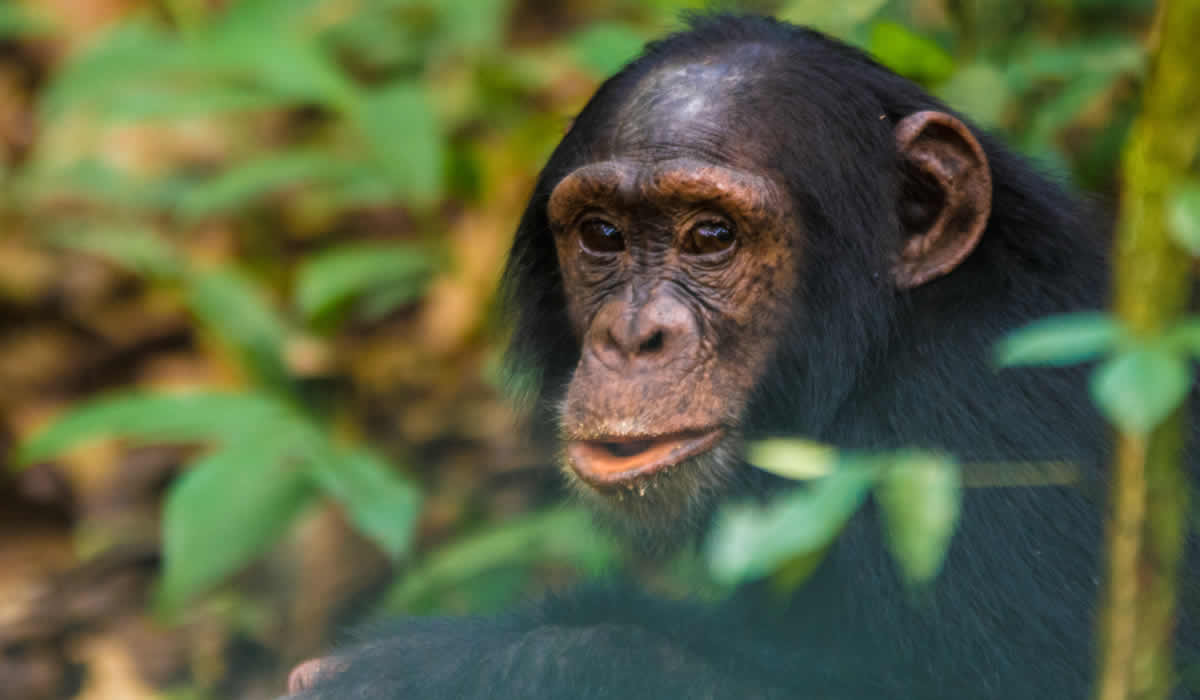
The park has four (4) communities of habituated chimpanzees and they include; Kanyawara community, ngongo, kanyanchu and sebitole Community. So Kibale National Park in habits over 1500 chimpanzees and other primate’s species include; White and black Colobus Monkey, baboons, blue monkey, Red tailed monkey, bush babies and De Brazza’s Monkey. Other animal species include; blue and red duiker, bushbucks, sitatungas, bush pigs, warthogs, buffaloes, leopards, serval cats, African golden cat and forest elephants.
The areas around the park are covered with mainly Batooro and Bakiga tribes. They get the food, firewood, and resources by the help of Uganda Wildlife Authority. The population around the park keeps increasing because of the revenue the park authorities share with the people in the neighboring communities to support their projects in a sustainable way and also tourism creates jobs for the neighboring communities for examples local guides during the Nature walks, lodges and also tourist to learn more about their cultures. Also, farmers around the park have increased since the soils around the park are fertile making it favorable for the growth of various crops like coffee around park surrounding areas. The benefits people around the park are getting from the existence of this park have encouraged them to support park activities.
CLIMATE
The Climate is usually pleasant with cold Nights and warm days but in Kibale National Park can rain at any time even during dry season. The mean annual temperatures range vary from 14 – 270C. It is characterized with high and low rainfall in the southern part where the terrain drops down onto the hot rift valley and open grassland. Kibale National Park receives receives a mean annual rainfall of 1700mm and especially during the month of May to March and September to November.
Dry Season / High season: This is the best time to visit Kibale National Park as most animals are concentrates near water bodies and shades. June to September and January to February is driest month in this park and it characterized with the mean temperatures of 800F / 250C.
Rainy Season / Low Season: The Month of March to May are rainy times and also October to Mid-December, so roads become muddy and Safari Landcruiser is recommended.
ACCESS / HOW TO GET THERE
BY ROAD TRANSPORT
The Park can be accessed through very many routes and especially from Kampala, the Capital city of Uganda and Fort portal town is the gateway to the most tourist’s attraction in the southern and western parts of Uganda and that is why, you may connect through it from various roads.
Kibale National park can be reached from Kampala, Mityana, Mubende and Fort Portal road. It takes 296km
The Park can also be accessed through tarmacked Ibanda to Fort portal road from Kampala, Masaka to Mbarara road then Ibanda and it takes 416km. On this route, one can visit Lake Mburo National Park and Queen Elizabeth National Park before reaching Kibale National Park. Also, on the same route, you can decide to branch from Mbarara town to Kasese town then Fort portal instead of Ibanda to Fort portal Road and this one takes 494km.
It can also be gotten through Kampala to Gulu high way where you will branch from Kafu river to Masindi town then to Murchison Falls National Park where one can after transfer to Kibale National Park through Bulisa to Hoima then Kagadi road to Kyenjojo road up to Fort Portal town. This one only works when the client is going to visit Murchison Falls National park.
Lastly, it can be accessed from Bwindi Impenetrable National Park then Queen Elizabeth national Park from south western part of Kibale National Park.
BY AIR TRANSPORT
Kibale National Park can be reached by domestic flights right from Entebbe International Airport or Kajjansiairfiled. There are two airstrips i.e. Kasese airstrip and Nyakisharara airstrip in Mbarara.
So, the clients can fly from Entebbe International Airport to Kasese airstrip then they will be transferred by safari vehicles to Kibale National Park
Also, they can fly to Nyakisharara airstrip then they will be driven for 100km to Kibale National Park.
TOURISM / TOURIST ACTIVITIES IN KIBALE NATIONAL PARK
-
Chimpanzee tracking or trekking
It is the highlight and the reason of visiting Kibale National Park, you will be taken to Kanyanchu headquarters for briefing and you will be grouped to 6 (six) people per group before you head for chimpanzee tracking. Enjoy seeing the closest creatures to human. The walk provides time and chances for the clients to see the primates in their natural habitat. So, you will see the way they eat, play and their behaviorswill show you that these are closest creatures to human beings. The chimpanzee group at Kanyanchu have been trained to be seen by human beings. You have the highest chance to see these primates and chimpanzee tracking time starts at 08:00am, 11:00am and 14:00pm. It might take 2-5 hours and depends on the time and location where you will find the chimpanzees, it can even take less hours but upon finding them, you are subjected to 1 (one) hour of viewing this Chimpanzees and this is done for future conservation. It also gives you added chance to spot other primates like red colobus monkey and the rare L’Hoest’s monkey, White and black Colobus Monkey, baboons, blue monkey, Red tailed monkey, bush babies and De Brazza’s Monkey.
-
Chimpanzee Habituation Experience
Chimpanzee habituation experience is far better than Chimpanzee tracking. It takes full or half day to explore the life of the chimpanzees in the jungle. You will be escorted with researchers, habituates and ranger guides into the forest to see these closest creatures to human beings, you will be briefed early in morning before heading for the experience at 06:30am. It enables you to start watching the chimpanzee’s right away as they wake up from their nests. So, you will follow them and see how they feed, breastfeed, play, rest, and as they are coupling. This is amazing and it is worthy visiting. You will spend 4 hours upon finding them.
-
Day and Night Nature walk
The 2-hour nature walk is exciting, it is an opportunity to hear the sounds, silence and see the beauty of the Jungle and actually it relaxes the mind totally in this different environment. In addition, you will encounter a list of bird species, primates and ever moist vegetation in this park. The ranger guide will escort you into the forest where he will show, explain theimportant tree species and their uses, birds and primates.
The Night Nature walk starts at 7:30 – 10:30 pm on daily basis and you will see the nocturnal animals and birds such as galagos, pottos and bushbabies and birds like Night Jars among other species.
-
Bird watching or Birding
Kibale National Park is rich of birds where one can spot up to 375 bird species, they include forest, grassland, water and rare bird species. It is a common and recommended place for bird watching especially in areas of Kanyanchu and Sebitoli trails. The experience can also combine with the visit to Bigodi wetland sanctuary where you can see the swamp species. The bird species include Crested fly catcher,Red- chested fluff tail,Red Winged Francolin, Red Winged Francolin, Green- breasted Pitta,Joyful Greenbul,Grey winged Robbin, Red Winged Francolin andAbyssinian Ground Thrush among others bird species.
-
Crater and Community walk
The guided walk to the crater lakes areas and communities provides a stunning view with the outstanding cultural visits just under the Ruwenzori Mountains. The area is rich with the crater lakes which gives a diversity of what to see while at Kibale National Park and community walk provides the chance to explore the lives and benefits of the people living around the park have gotten, also you will explore the cultures of Batooro and Bakiga people dominating on the edges of Kibale National Park especially in Bigodi Wetland areas.
ACCOMMODATIONS / WHERE TO STAY
HIGH END LODGES / LUXURY FACILITIES
- Kyaninga Lodge
- Ndali Lodge
- Crater Safari Lodge
- Primate Lodge Kibale
- Papaya Lake Lodge
MID- RANGE FACILITIES
- Mountains of the Moon Hotel
- Kibale Forest Camp
- Isunga Lodge
BUDGET FACILITIES
- Chimpanzee Guesthouse
- Kibale Forest Lodge
- Rwenzori View Guesthouse
- Rweteera Safari Lodge